
Indian Oil Corporation and Bharat Petroleum Corporation have backed out of Gail's Vizag-Secunderabad LPG pipeline.
India imports 73 per cent of its crude oil import needs and the cost of imports would spiral after crude inched closer to a record $125 per barrel, while rupee touched its 13-month low, official sources said. The basket of crude oil India imports was at $120.65 per barrel on Thursday, a 91 per cent jump over the last fiscal's lowest price of 62.91 dollars recorded on May 9, 2007, official sources said.
The government will complete the sale of cash-rich oil refiners Hindustan Petroleum Corporation and Bharat Petroleum Corporation in six to eight months, Divestment Minister Arun Shourie said on Wednesday.
Balmer Lawrie & Company, whose 61.97 per cent stake is slated to be divested by the Centre, is unlikely to be sold off during the current fiscal.
The divestment ministry said on Thursday that the inter-ministerial group on the divestment of Bharat Petroleum Corporation would meet next week to discuss the quantum of shares to be offered in the domestic and global markets.
The divestment ministry is now all set to flag off the process of divestment in Bharat Petroleum Corporation with the Inter-Ministerial Group scheduled to meet on February 13.
Attorney General Soli Sorabjee has said the sale of stakes in two state-run oil refiners does not need parliamentary approval.
Attorney-General Soli Sorabjee's response on the privatisation of Hindustan Petroleum Corporation Ltd and Bharat Petroleum Corporation Ltd is likely to be known later this week.
A day ahead of a crucial meeting of the Cabinet Committee on Divestment, Defence Minister George Fernandes said he favoured public sector units like Oil and Natural Gas Corporation to be allowed to bid for HPCL.
Disinvestment Minister Arun Shourie said Tuesday the SEBI has initiated an investigation into the fall of share prices of BPCL and HPCL.
Divestment Minister Arun Shourie will soon make a statement on stake sales in two state-run oil firms following a consensus reached on the issue by a group of top ministers.
Government had last week issued bonds worth Rs 11,256.92 crore (Rs 112.56 billion) to three PSU oil marketing companies to compensate them for under-recoveries on selling petrol, diesel, domestic LPG and PDS kerosene in April-September 2007 period.
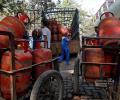
The government is likely to provide a subsidy of Rs 35,000 crore to state-owned Indian Oil Corporation Ltd (IOC), Bharat Petroleum Corporation Ltd (BPCL), and Hindustan Petroleum Corporation Ltd (HPCL) to make up for losses they incurred on selling the fuel this fiscal, sources said.
S Rajendra Babu, a Supreme Court judge, was on Thursday appointed the Chief Justice of India with effect from May 2.
Deputy Prime Minister L K Advani on Thursday termed as an "obstacle" the Supreme Court ruling halting the privatisation of oil firms HPCL and BPCL and said the government will "manoeuvre" it to keep the momentum of divestment programme.
Leading oil companies dedicated the second day of India Energy Week (IEW) 2025 to announcing strategic deals and business agreements across the supply chain - from sourcing more crude oil supply to deploying more domestic ships and building gas distribution capacity.
Oil major ONGC is believed to have been kept out of the bidding process for the two oil PSUs.
The government has been able to mobilise Rs 3,000 crore to Rs 3,500 crore (Rs 30-35 billion) by way of divestment during the first nine months of the current financial year, Divestment Minister, Arun Shourie.

After the two hikes, the ATF prices had risen to above September levels, the official said. The three oil firms revise jet fuel prices on the first and the 16th day of every month based on the average global oil price in the previous fortnight.
The government is planning a moderate hike of Rs 1-1.50 per litre in the prices of petrol and diesel in view of the rising global crude tags.

IOC and sister PSUs Bharat Petroleum and Hindustan Petroleum are losing Rs 4.60 on sale of every litre of petrol and Rs 2.33 per litre of diesel currently, IOC director (marketing) G C Dagga told reporters in New Delhi.
Public sector oil retailing firms have lost over Rs 5,800 crore in the first six weeks of current fiscal due to non-revision of petrol, diesel, LPG and kerosene prices.
The jet fuel rate will go up by Rs 104 per kilolitre in Delhi to Rs 32,303, an IOC official said. The increase comes on the back of a 1.8 per cent hike in rates on May 16. On May 1, state-run oil firms marginally reduced the price by one per cent, which had brought the rates in Delhi down to Rs 31,614.51 per kl. In Mumbai, home to the nation's busiest airport, the rate will go up from Rs 33,138 per kl to Rs 33,261 per kl.
Indian Oil, Bharat Petroleum and Hindustan Petroleum raised the aviation turbine fuel price by Rs 585 per kilolitre in Delhi to Rs 32,199 with effect from midnight tonight, an IOC official said. The increase comes on the back of a marginally one per cent reduction effected on May 1, which had brought the rates in Delhi down to Rs 31,614.51 per kl.
State-run Bharat Petroleum Corp has offered to take Hindustan Petroleum Corp as equal partner in the Rs 6,354 crore (Rs 63.54 billion) Bina refinery in Madhya Pradesh.
Petrol and diesel prices are likely to go up by at least Rs 2 per litre after the Lok Sabha polls, once the current freeze on revising prices in step with the cost of the raw material -- crude oil -- is lifted.
Indian state-run oil giants HPCL and BPCL reported on Wednesday no supply disruptions as result of a two-day-old strike by workers opposing privatisation of the refiners.
HPCL, BPCL shares may yield Rs 1000 cr bonanza for employees
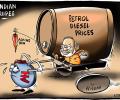
Price of international crude oil - the raw material for making petrol and diesel - dropped to a three-year low before marginally recovering but a revision in domestic petrol and diesel rates is likely only if lower rates are sustained, industry sources and officials said. Global oil benchmark Brent crude futures fell below $70 per barrel on Tuesday - the first time since December 2021 - but gained thereafter after Hurricane Francine hit crude supply in the Gulf of Mexico. Brent rose above $71 a barrel on Thursday while West Texas Intermediate advanced to trade near $68.
With the government giving limited freedom to state-run oil companies to fix auto fuel prices within a narrow price band, petrol prices are set to go up by Rs 0.57 per litre and diesel by Rs 0.92 per litre from August 1.

The three oil PSUs have told Air India that if it did not make the monthly lump sum payment, they will stop fuel supply from October 11 at six major domestic airports.
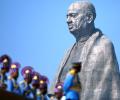
ONGC, Hindustan Petroleum, Bharat Petroleum, Indian Oil and Oil India listed the spending as part of their mandatory CSR commitment, but CAG noted that the Sardar Patel statue did not qualify for CSR funding.

Noting that Gandhi had claimed that armed forces can restore peace in the state within days if allowed, BJP leader and former Union minister Ravi Shankar Prasad wondered if he wanted what his grandmother and then prime minister Indira Gandhi had done by ordering the Air Force to drop bombs in Aizawl in the 1960s.

This is the second hike in diesel price this month.
The cut reflects changes in global prices of the two fuels since the last revision.

Dividends paid by central public-sector enterprises (CPSEs) in 2024-25 are set to be the highest ever, with the government receiving 69,873 crore so far. A government official said he was hopeful the receipts would touch 70,000 crore in the last week of the financial year.
